Source Luminous Simple Wall Clock for Home Office and Hotel Decor
Find 30 luminous simple wall clock options featuring rectangular, circular, and square designs with electronic or mechanical movements. Buyers can compare prices, customization, and specifications from verified Chinese manufacturers.
Key considerations
Products List
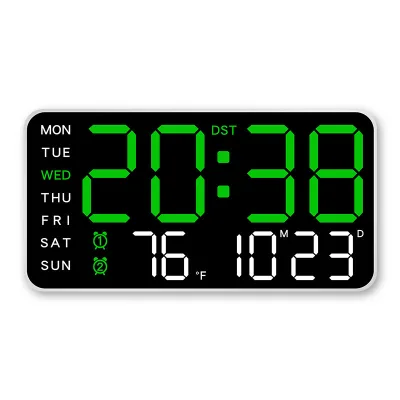


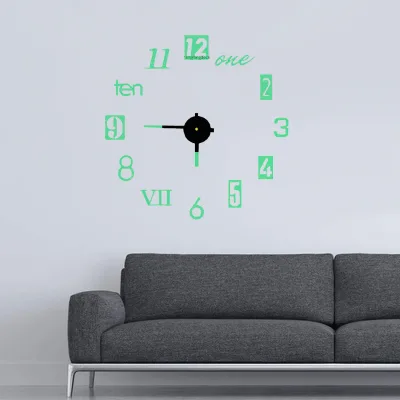


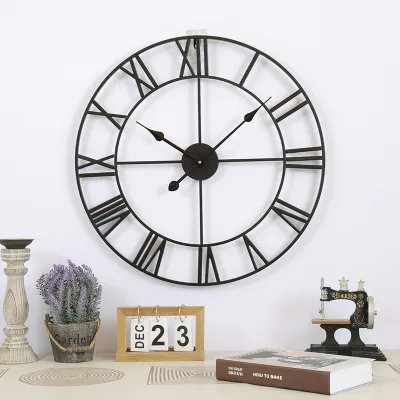


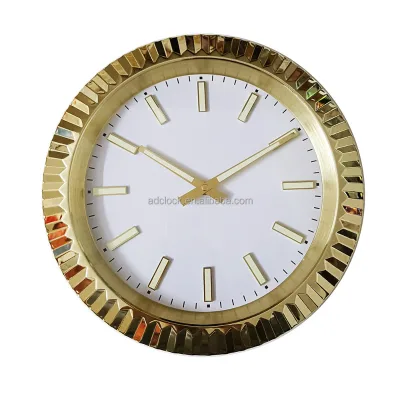


Comprehensive Sourcing Guide
Strategic Sourcing Guide for Luminous Simple Wall Clocks
Understanding Product Attributes and Technical Specifications
When sourcing a luminous simple wall clock, buyers must first distinguish between the various technical configurations available in the market. The core keyword implies a device that combines visibility in low-light conditions with a minimalist aesthetic. Based on observed product data, the market offers distinct variations in movement type, which is a critical differentiator. Some units are equipped with electronic movements, while others utilize step movements or mechanical mechanisms. The choice of movement directly impacts the ticking sound, accuracy, and power consumption. For instance, a "Low Noise" attribute is frequently highlighted, suggesting that for environments requiring quiet operation, such as bedrooms or libraries, the mechanical or step movement options must be scrutinized for their acoustic performance.
The physical design of these clocks varies significantly, ranging from rectangular and square shapes to circular forms. The material composition is predominantly plastic, which offers durability and cost-effectiveness but may differ in perceived quality compared to metal or wood alternatives. The dimensions observed in the supply chain vary widely, with specific models citing standards such as 16.565 inches, 15.565 inches, or larger formats like 3060cm and 4934*65cm. Buyers must verify these dimensions against their intended wall space, as the "Simple" design style often correlates with specific size constraints that fit modern interior decor. Furthermore, the power source is typically a AAA battery, which is noted as not included in the package. This requires the buyer to factor in the ongoing cost of battery replacement and the logistics of ensuring the product is ready for immediate use upon delivery.
Compliance, Certification, and Safety Standards
In the B2B procurement of wall clocks, compliance with safety and quality standards is paramount, even for seemingly simple consumer goods. While the provided data does not list specific certification bodies like UL, CE, or RoHS, the attribute "High Quality" suggests that reputable suppliers adhere to baseline manufacturing standards. Buyers should explicitly request documentation regarding material safety, particularly since the primary material is plastic. Ensuring the plastic is free from harmful chemicals is essential for products intended for home decoration.
The origin of the product is a significant factor in compliance. The data indicates that the place of origin is China, with specific mentions of Zhejiang as a production hub. Sourcing from this region requires a rigorous verification process to ensure that the manufacturing facilities meet international safety regulations. Buyers must verify that the "Customized Logo" and "Customized Packing" options do not compromise the structural integrity or safety labeling of the product. Additionally, the "16.565 inches" and similar measurements listed as "prod_standard" should be treated as specific model dimensions rather than universal industry standards. Procurement teams must confirm that these dimensions align with local building codes or safety regulations regarding hanging fixtures, particularly if the clock is heavy or has a large surface area.
Cost Drivers and Pricing Dynamics
The pricing structure for luminous simple wall clocks is influenced by several variables, including movement complexity, customization level, and order volume. The observed price range in the market spans from $1.03 to $99 USD, indicating a vast disparity between basic models and premium, feature-rich units. The lower end of this spectrum likely corresponds to standard electronic or mechanical movements with minimal customization, while the higher end may reflect complex designs, superior materials, or extensive branding options.
Minimum Order Quantity (MOQ) is another critical cost driver. The data reveals an MOQ range of 10 to 1000 pieces, with specific instances of 10, 20, and 50 pieces. Buyers with smaller budget constraints might target suppliers with lower MOQs, such as 10 or 20 pieces, to test the market. However, larger orders often unlock better unit pricing. The weight of the product, observed at 0.8kg to 1.2kg per piece, also impacts shipping costs. Heavier items, such as those with a weight of 1.2kg, will incur higher freight charges, which must be factored into the total landed cost. Additionally, the "Sample Time" of 7 days suggests that customization or specific model requests may incur lead time costs, which can affect the overall project timeline and cash flow.
Typical Applications and Market Segmentation
The versatility of the luminous simple wall clock allows for a broad range of applications. The "occasion" attribute is listed as "all," indicating suitability for residential, commercial, and institutional settings. In residential contexts, the "Home Decoration" and "Use: Decoration" attributes highlight the clock's role as an aesthetic element. The "Simple" design style and "Art Deco" options suggest that these clocks can complement various interior design themes, from modern minimalist to vintage-inspired spaces.
Commercial applications are equally viable. The "Multi-Function" capability, which may include day/date features, makes these clocks practical for office environments, hotels, and educational institutions. The "Luminous" feature is particularly valuable in areas with variable lighting conditions, such as hallways, stairwells, or emergency exit routes, where visibility is crucial. The "Low Noise" attribute is a specific selling point for environments like hospitals, libraries, or high-end hotels where acoustic comfort is a priority. Buyers should consider the specific needs of their target market when selecting between the different movement types and shapes available.
Supplier Evaluation and Customization Capabilities
Evaluating a supplier for wall clock procurement requires a focus on their customization capabilities and production reliability. The data confirms that "Customized Logo" and "Customized Packing" are widely accepted, with some suppliers noting "Acceptance" or "Accept" for these requests. This flexibility is essential for brands looking to create a cohesive product line. However, buyers must verify the technical feasibility of these customizations, such as the printing techniques used for logos, which are noted as "Printing" in the data.
Supplier reliability is further indicated by the "Sample Time" of 7 days and the "Quality: High Quality" attribute. A short sample turnaround time suggests an agile production process, which is beneficial for rapid prototyping. However, buyers should also inquire about the "Sample Time" for bulk orders, as this may differ significantly. The "Customization: Available" and "Customizable: Accept" attributes indicate a willingness to adapt, but the extent of this adaptation—whether it includes color, size, or functional changes—must be clearly defined in the contract. Additionally, the "Packing" options, ranging from individual boxes to carton boxes with 10 pieces per carton, offer logistical flexibility. Buyers should assess whether the supplier can meet specific packaging requirements to minimize damage during transit and optimize storage space.
Quality Control and Long-Term Procurement Considerations
Ensuring consistent quality is a continuous process in B2B procurement. The "Durable" attribute suggests that the products are designed for longevity, but this must be validated through rigorous quality control checks. Buyers should implement a quality assurance plan that includes visual inspections for finish defects, functional tests for the movement and luminous features, and durability tests for the casing and hanging mechanisms. The "Weight" variations, such as 0.8kg versus 1.2kg, may indicate differences in material density or construction quality, which should be verified against the agreed-upon specifications.
Long-term procurement considerations involve building a sustainable supply chain. The "Customized" nature of the product means that once a design is finalized, it may require specific tooling or setup, making it advantageous to establish a long-term relationship with a reliable supplier. The "10 PCS/Carton Box" packing standard suggests a modular approach to shipping, which can be optimized for volume. Buyers should also consider the "Battery: AAA Battery (Not Included)" aspect, ensuring that the supply chain includes a strategy for battery sourcing or that the product is marketed with clear instructions for battery replacement. Finally, the "High Quality" claim should be backed by a clear return policy and warranty terms to mitigate risks associated with potential defects or performance issues in the field.
Comparative Analysis of Key Product Models
To assist buyers in making informed decisions, the following table summarizes the key attributes of observed product models. This comparison highlights the diversity in specifications, helping procurement teams align product selection with specific project requirements.
| Product Model | Shape | Movement Type | Dimensions (Approx.) | Weight | Packaging | MOQ |
|---|---|---|---|---|---|---|
| ZHZ-0620 | Rectangular | Electronic | 16.565 inches | N/A | Customized | 10 |
| ZHZ-0611 | Rectangular | Mechanical | 15.565 inches | 1.2kg | Box | 20 |
| ZHZ-0638 | Circular | Step Movement | N/A | N/A | Carton Box | 50 |
| 28946 | Square | N/A | 30*60cm | 1.2kg/Pieces | 10 PCS/Carton Box | N/A |
| 28487 | N/A | N/A | 493465cm | N/A | Carton Box | N/A |
| 1 | N/A | N/A | N/A | N/A | N/A | N/A |
| 2025517 | N/A | N/A | N/A | 0.8kg | N/A | N/A |
Note: Data points marked "N/A" indicate that specific attributes were not explicitly listed for that model in the provided context. Buyers should verify these details directly with the supplier.
This table underscores the importance of detailed specification checks. For instance, while the ZHZ-0620 is electronic and rectangular, the ZHZ-0611 is mechanical and rectangular but carries a specific weight of 1.2kg. The 28946 model offers a larger footprint at 30*60cm, suitable for commercial spaces, while the 2025517 model is lighter at 0.8kg. Understanding these nuances ensures that the selected product meets both functional and aesthetic requirements without compromising on quality or logistics.
FAQs
What movement types are available for these clocks?
The market offers electronic, step, and mechanical movement types for luminous simple wall clocks. Buyers must verify the specific movement in each model, as electronic options often feature low noise while mechanical variants may differ in accuracy and power consumption requirements.
Can I request a customized logo on the product?
Yes, customized logos are acceptable for most luminous simple wall clock models. Suppliers typically offer this service alongside customized packing options, allowing brands to create unique product lines without compromising the structural integrity or safety labeling of the final item.
What are the standard dimensions for these wall clocks?
Dimensions vary by model, with observed standards including 16.5 by 6 by 5 inches and 15.5 by 6 by 5 inches. Larger formats like 30 by 60 cm are also available, so buyers must verify specific measurements against their intended wall space before placing an order.
How much is the minimum order quantity for these items?
The minimum order quantity ranges from 10 to 1000 pieces depending on the supplier and model. Specific instances show MOQs of 10, 20, and 50 pieces, allowing buyers with smaller budgets to test the market while larger orders may unlock better unit pricing.
Where are these clocks manufactured and what is the origin?
The primary place of origin is China, with specific production hubs identified in Zhejiang. Buyers sourcing from this region should verify that manufacturing facilities meet international safety regulations, particularly regarding the plastic materials used for the clock casings.
What is the typical sample time for custom orders?
The sample time is typically 7 days for custom requests or specific model configurations. This short turnaround suggests an agile production process beneficial for rapid prototyping, though bulk order lead times may differ significantly from the initial sample delivery schedule.